RIED+ Projects
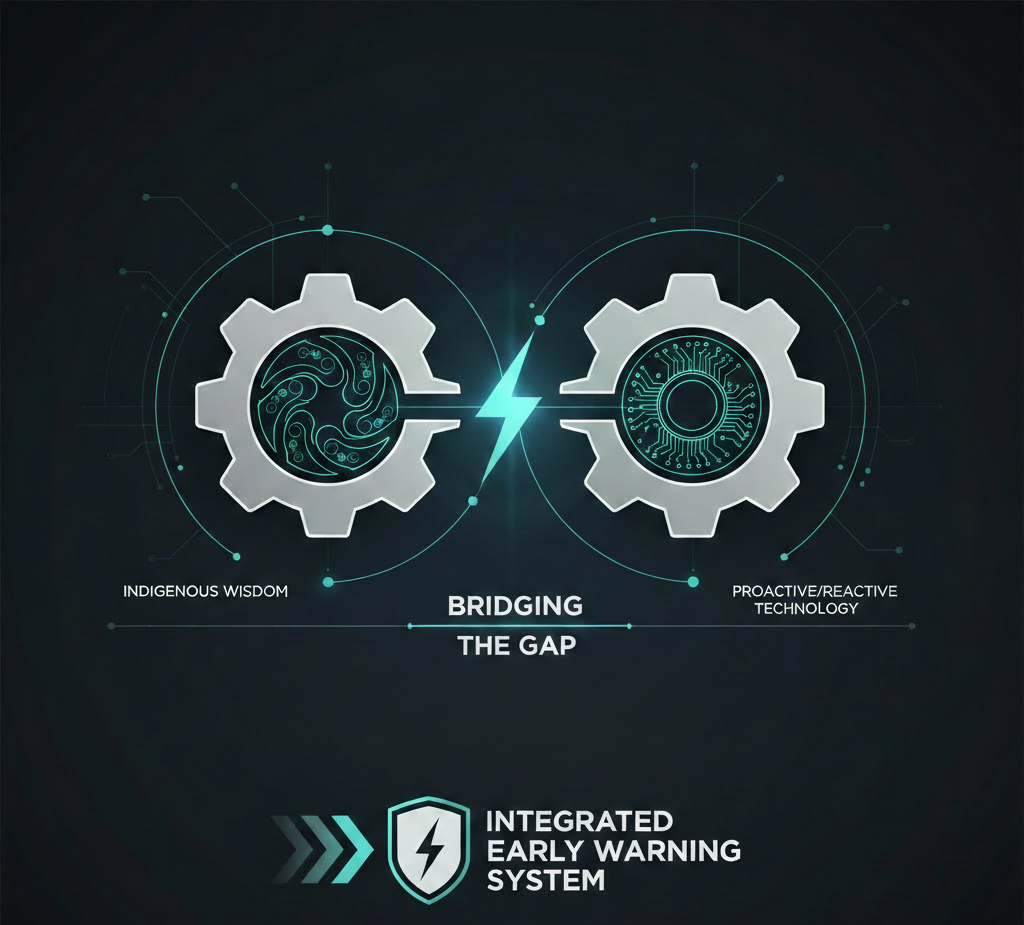
Ecosystem-based Early Warning System
An early warning system is effective only when warnings are trusted, understood, accessible, and connected to actions that people can realistically take. Scientific accuracy is essential, but it is not sufficient.
Communities may receive warnings but lack safe transportation, secure shelters, financial resources, social support, or confidence in the institutions issuing the information. Messages may not reach people with disabilities, residents in remote areas, people without digital access, migrant populations, or communities that speak different languages. Previous experiences of inaccurate warnings, delayed government response, or institutional neglect may also affect public trust.
The platform studies early warning as a human and institutional system rather than a purely technological product. It considers how risk information is produced, interpreted, communicated, and acted upon. It emphasizes the importance of community participation in identifying hazards, designing communication channels, establishing response protocols, and evaluating whether warnings lead to protective action.
A community-centered system does not treat residents as the final recipients of information. It recognizes them as active participants in risk assessment, communication, preparedness, response, and learning.

Disaster Risk Reduction and Resilience
Disasters are often described as natural events, but their effects are shaped by human decisions. A hazard becomes catastrophic when it meets unsafe housing, inadequate infrastructure, environmental degradation, poverty, institutional weakness, exclusion, or a failure to prepare.
Disaster risk reduction therefore requires more than emergency response. It involves understanding how risk accumulates, why some populations remain repeatedly exposed, and how planning and investment decisions can reduce or reproduce vulnerability.
This platform examines disaster preparedness, risk communication, anticipatory action, recovery, and resilience from a community-centered perspective. It asks whether disaster risk initiatives address the structural conditions behind repeated losses and whether recovery efforts restore previous vulnerabilities or create opportunities for safer and more equitable development.
Resilience, in this context, does not simply mean the ability to endure hardship or return to an earlier condition. It includes the ability of people and institutions to learn, adapt, reorganize, challenge harmful systems, and pursue more just and sustainable futures.